
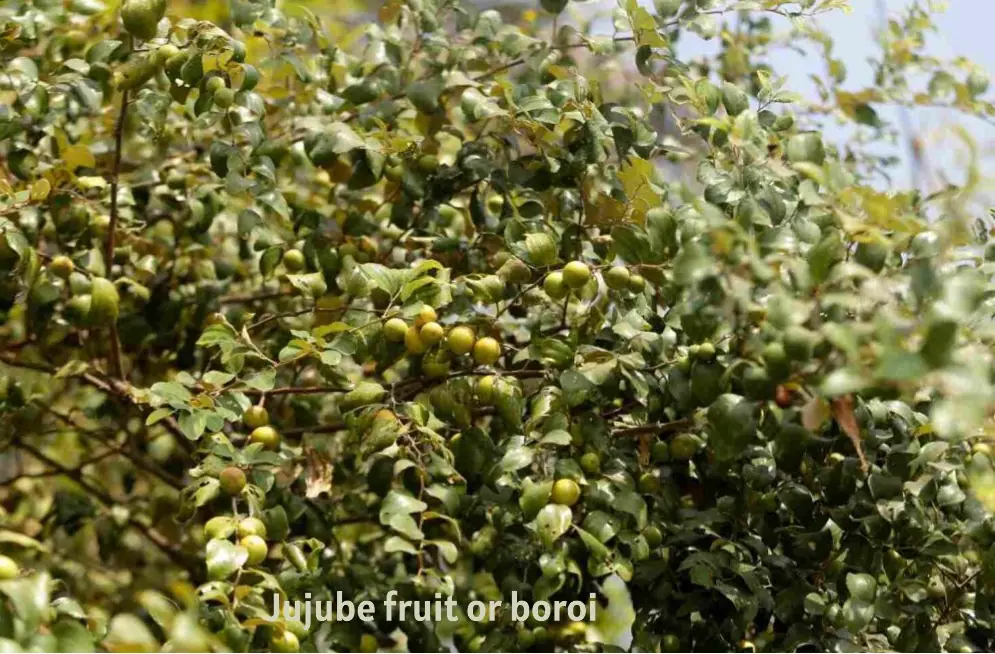
What Is Boroi Called in English? Boroi English Name & Jujube
Jujube (Boroi or Kul) is a well-known fruit in South Asia. It has a sweet and sour flavor and is high in vitamins, fiber, and minerals. This fruit aids in purifying the blood, managing high blood pressure and diabetes, and also assists with weight loss. It is typically available in winter and comes in various types.
What Is Boroi Fruit Called in English? Boroi English Name
Boroi is called Jujube in English. It is also commonly known as Chinese date. Boroi or Kul belongs to the Ziziphus genus.
What Is Boroi Called in English?
Boroi is called jujube in English. In Bangladesh, the fruit is also commonly known as Kul (কুল), and both Boroi and Kul generally refer to jujube fruit. You may also see it called jujube fruit or Chinese date in English.
- Boroi (বরই) → Jujube
- Kul (কুল) → Jujube
- Common English name → Jujube / Jujube fruit
- Another common name → Chinese date
- Scientific name → Ziziphus mauritiana for the commonly cultivated Indian jujube found across South Asia.
Is Boroi the Same as Jujube?
Yes. Boroi (বরই) and Kul (কুল) are common South Asian names used for fruits that are generally known as jujube in English. The connection can be understood simply.
Boroi → Kul → Jujube → Ziziphus
Boroi Fruit in English: Quick Facts
| Bengali/Common name | English |
|---|---|
| বরই | Jujube |
| কুল | Jujube |
| Boroi | Jujube |
| Kul fruit | Jujube fruit |
| Boroi tree | Jujube tree |
| Boroi leaves | Jujube leaves |
English name boroi fruit or Scientific Name of Kul / Boroi:
The scientific name of kul or boroi leaves is typically Ziziphus zizyphus or Ziziphus mauritiana. These names refer to different species of kul and boroi trees. It is a thorny tree commonly found in South Asia and is also known as jujube or Chinese date.
– Common small, oval-shaped kul: Ziziphus mauritiana
– Common boroi / kul: Ziziphus zizyphus
Details about Jujube (Boroi / Kul):
Introduction:
Boroi or Kul (scientific name: Ziziphus zizyphus) is the fruit of a thorny tree. It is quite common and popular in Bangladesh and other South Asian nations.
Types:
There are primarily two types of boroi found locally—local and hybrid varieties. They vary in size and taste, including sour boroi and sweet kul.
Nutritional Value:
Boroi is a good source of vitamin C, vitamin A, fiber, potassium, carbohydrates, and various minerals.
Boroi Fruit Benefits
– Aids in cleansing the blood and regulating high blood pressure and diabetes.
– Useful in treating diarrhea, anemia, and bronchitis.
– High fiber content supports weight loss.
– Reduces inflammation and helps maintain electrolyte balance.
What Is Boroi Fruit Used For?
Boroi can be consumed both raw and ripe. It is also used to prepare pickles, chutney, and sweet preserves.
Nutritional Value of Kul / Boroi:
Boroi is very low in calories but abundant in fiber, vitamins, and minerals. In 100 grams of boroi, there are approximately 79 calories, 1 gram of protein, 20 grams of carbohydrates, and 10 grams of fiber. It provides around 77% of the daily requirement of vitamin C and about 5% of potassium. It also contains trace amounts of other vitamins and minerals, along with a high level of antioxidants.
Health Benefits of Kul / Boroi:
Boroi is very beneficial for the nervous system, immunity, and digestion. Its health benefits include:
– Boroi is rich in vitamin C, which acts as a potent antioxidant. It helps reduce free radicals and protects against diseases such as diabetes and cancer, while also alleviating fatigue.
– Consuming boroi enhances immunity and may help prevent cancer. It can combat cancer cells, tumor cells, and leukemia, and also offers liver protection.
– Boroi supports digestion and helps relieve constipation and other digestive issues.
– Kul functions as a natural blood purifier. Sour boroi is particularly advantageous for individuals with high blood pressure and diabetes.
– Due to its high vitamin C content, boroi helps prevent infections like tonsillitis, mouth sores, and tongue ulcers.
– Boroi helps prevent seasonal fevers, colds, and coughs. It enhances digestion, increases appetite, and contributes to keeping the skin soft and smooth by reducing dryness.
hat Does Boroi Fruit Look Like?
Boroi, also known as jujube, is a small, round or oval-shaped fruit that changes in appearance as it ripens.
- Shape: Usually round, oval, or slightly elongated, depending on the variety.
- Color: Young Boroi is generally green. As it ripens, the skin can turn yellowish-green, yellow, reddish-brown, or brown.
- Size: Most Boroi fruits are small, usually around 2–5 cm long, although some varieties can be larger.
- Taste: The taste ranges from slightly sour and tangy when unripe to sweet and mildly fruity when fully ripe.
- Texture: Fresh Boroi has thin, firm skin and crisp, juicy flesh. Ripe fruits become softer and may have a slightly chewy texture.
- When commonly available: In Bangladesh and nearby regions, Boroi is mainly available during the winter and early spring months, although the exact season can vary by variety and location.
Boroi Tree, Leaves and Other English Names
Boroi tree → Jujube tree
The Boroi tree is commonly called a jujube tree in English. It is a small, hardy fruit tree that produces the Boroi or Kul fruit.
Boroi leaves → Jujube leaves
Boroi leaves are generally called jujube leaves in English. The leaves are small, green and oval-shaped, growing along the branches of the jujube tree.
Kul/Boroi → Common English names
In English, Boroi or Kul is commonly known as jujube, jujube fruit, or sometimes Chinese date. The exact common name can vary depending on the species and region.
Scientific name
The scientific name commonly associated with Indian/Bangladeshi Boroi or Kul is Ziziphus mauritiana. Another species, Ziziphus jujuba, is also commonly known as jujube, so the scientific name should be matched to the particular species.
Regional names
Boroi has different names across South Asia. In Bangladesh it is commonly called Boroi (বরই) or Kul (কুল). In other regions, related fruits may be called Ber, Ber fruit, Bogori or other local names. These names can refer to different varieties or closely related Ziziphus species.

Pingback: How to Make Money as a Food Blogging? A Beginner’s Guide to Profit -2026